All & Everything 30th Annual Conference
The 2025 G.I. Gurdjieff Conference will be held at The Queens Hotel in Leeds, from April 30th to May 4th, 2025
All and Everything Conference Mission
The All and Everything International Humanities Conference is an international forum for the presentation and discussion of studies associated with the exploration of the work and legacy of G.I. Gurdjieff, and in particular his writings.
The conference aims to provide an impartial, serious, and congenial atmosphere for those who wish to explore these teachings with the hope that, by sharing questions and insights, a wider horizon of understanding and practical incorporation may appear.
The conference is open to all students of Gurdjieff’s work and legacy. While providing a framework for structured meetings, discussions and readings, the conference also aims to facilitate interactions to encourage relationships and exchanges among individuals and Work groups.
The All and Everything International Humanities Conference was proposed by Mrs. A.L. Staveley for the purpose to “try and fathom the gist” of the writings of G.I. Gurdjieff as “companions of the book.”
The Queens Hotel

The Queens Hotel, Leeds
About us
We’ve been welcoming guests since 1937. Head through our art deco doors and you’ll be following in the footsteps of Nelson Mandela, Princess Grace of Monaco, Cary Grant and Laurel and Hardy.
All Souls’ Church, Blackman Lane, Leeds

All Souls’ Church
The Church was built by public subscription in one of the poorest districts of Leeds, the Leylands, as a memorial to Dr W. F. Hook, Vicar of Leeds for some 22 years and later Dean of Chichester. The design is simple and impressive in scale: 134ft in length with aisles both to the nave and chancel, a southwest porch and a baptistery under the northwest tower.
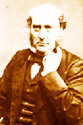
Sir George Gilbert Scott

All Souls’ Church, Blackman Lane, Leeds

Challen Piano

All Souls’ Car Park
The Leeds Arts Club
The Leeds Arts Club was founded in 1903 by the Leeds primary school teacher Alfred Orage and Holbrook Jackson, a lace merchant and freelance journalist, and was one of the most advanced centres for radical thought, modernist thinking and experimental art in Britain in the pre-First World War period.
The club’s rooms were above the offices of the Leeds Permanent Building Society, and housed two of Orage and Holbrook Jackson’s (co-founder) other concerns, the Fabian Society and the Leeds Theosophical Lodge. Membership of all three groups was not uncommon. Most nights there were meetings, and the combined membership paid the rent.
The books in the library reflected all three groups, one wall housed theosophical literature, and another philosophical, psychological and economic, including the work of Wells and Shaw.
The foremost of the club’s activities were the Saturday afternoon meetings, where there would be a speaker and discussion of the issues raised by the talks given. The first of these sessions was given by Orage on the subject of Frederich Nietzche on the evening of Saturday 7th November 1903. The audience was apparently scandalized but this seems to have been the intention.
In the meantime Orage developed his talent for public speaking in the open air as well as at meetings with Socialists and Theosophists; he also was active as a member of the Society for Psychical Research. Throughout his activities in these varied fields, and with the Nietzscheans, Platonists and Fabians, his heart of fire was tempered with a brain of ice which prevented his being caught up in the sentimentality which so often surrounds such groups; he taught with a critical mind that questioned everything.
In 1906 Orage and Jackson left Leeds and moved to London to edit the hugely influential political and cultural journal The New Age. Albert Wheatley Waddington, an architect, and Annie Kennedy, a schoolteacher and Jean Orage’s cousin, acted as secretary and assistant secretary, developing links with the University of Leeds. The Club continued to host speakers, as well as arranging summer excursions, a life-drawing group, a musical committee, a book group and lending library. In February 1908, the Club moved to 8 Blenheim Terrace, Woodhouse Lane, a 3 storey house near to the University, despite the fact that members were still largely non-university men and women.
Blue Plaque, 8 Blenheim Terrace, Leeds

8 Blenheim Terrace, Leeds

Leeds Arts Club Plaque
0 Comments